


🥳2026 HOT SALE🥳💞50K+ SOLD! 🛠️🔧 50% OFF! Heavy-Duty Floor Gap Fixer – 70kg pulling force, 4.65″ suction cup. Closes gaps between floorboards – no need to call a pro! 🏠✨
🥳2026 HOT SALE🥳💞50K+ SOLD! 🛠️🔧 50% OFF! Heavy-Duty Floor Gap Fixer – 70kg pulling force, 4.65″ suction cup. Closes gaps between floorboards – no need to call a pro! 🏠✨
BUNDLE & SAVE
Couldn't load pickup availability
-
Ordered
- - -
Order Ready
- - -
Delivered

🥳2026 HOT SALE🥳💞50K+ SOLD! 🛠️🔧 50% OFF! Heavy-Duty Floor Gap Fixer – 70kg pulling force, 4.65″ suction cup. Closes gaps between floorboards – no need to call a pro! 🏠✨
Close The Floor Gap Without Pulling The Room Apart.
Lock the oversized suction cup onto a compatible smooth floorboard, then use the integrated striking block to help slide the plank back toward the gap.

That Dark Line Between The Planks Is Hard To Ignore.
Floating floor planks can sometimes shift and leave a visible opening between boards.
The problem isn't always that the board needs replacing—it may simply need to be moved back toward its neighboring plank.
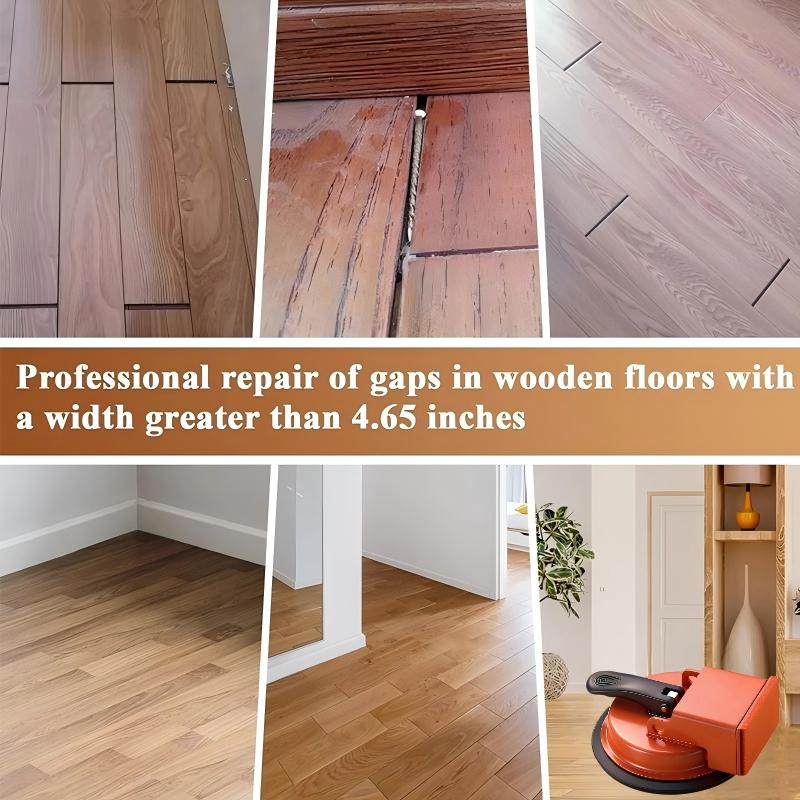
Suction Gives You A Temporary Handle On The Plank.
Press the large rubber pad against a clean, dry and compatible non-porous floor surface, then close the lever to create suction.
Once the tool has a secure hold, the plank can be acted on through the tool instead of trying to pry directly against the flooring edge.
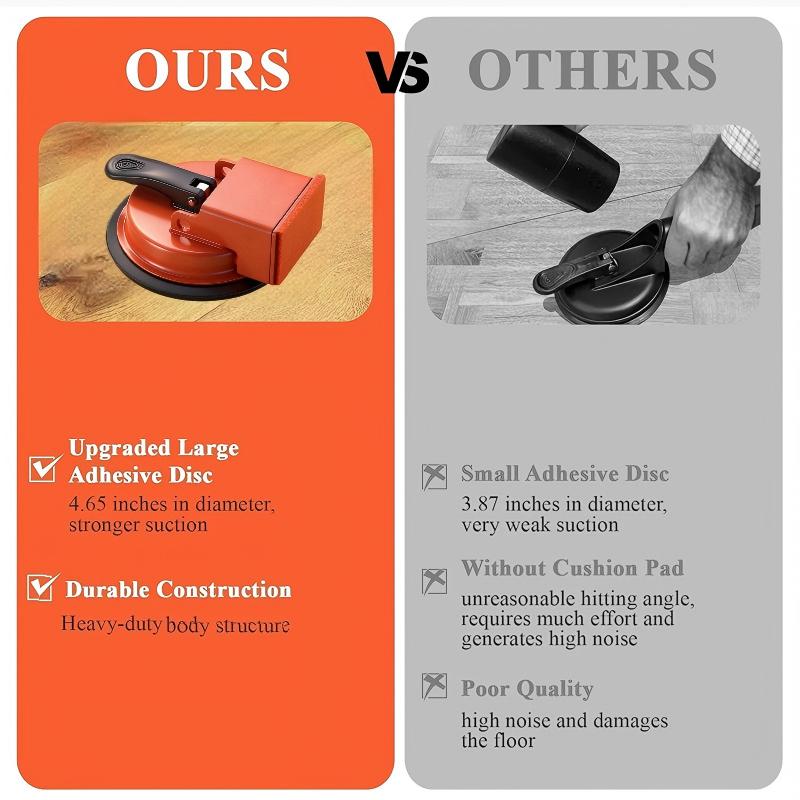
The 118 mm / 4.65″ suction cup spreads contact across a larger section of the plank.
Press down and close the handle to create the suction seal.
The 9 mm rubber pad sits between the metal body and compatible floor surface.
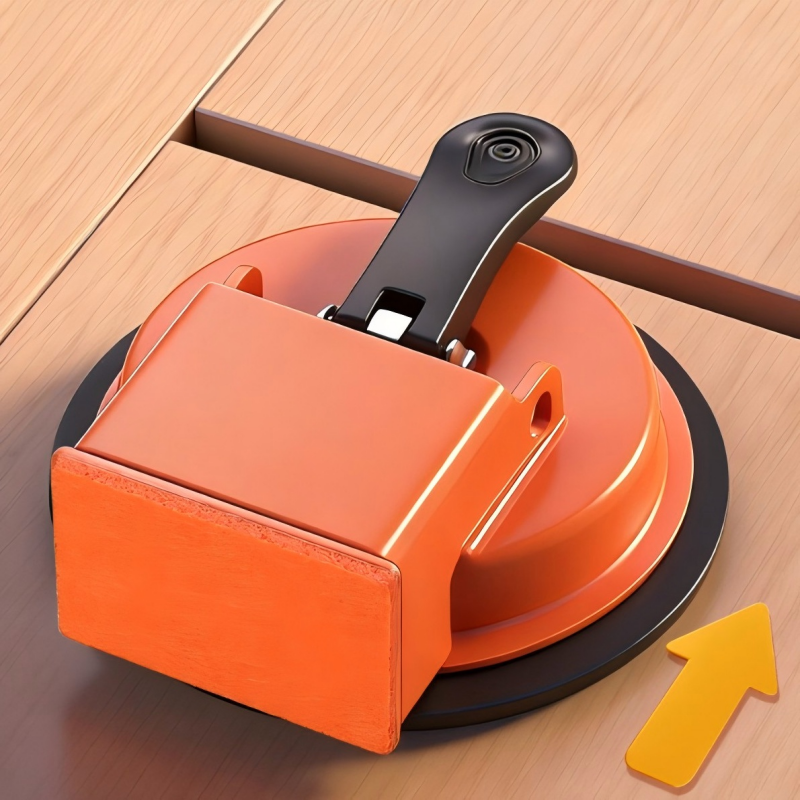
The Striking Block Gives You A Clear Place To Tap.
The orange metal housing includes a dedicated striking face designed to be tapped with a suitable mallet.
With suction secured, controlled taps can help move the attached plank toward the open joint.
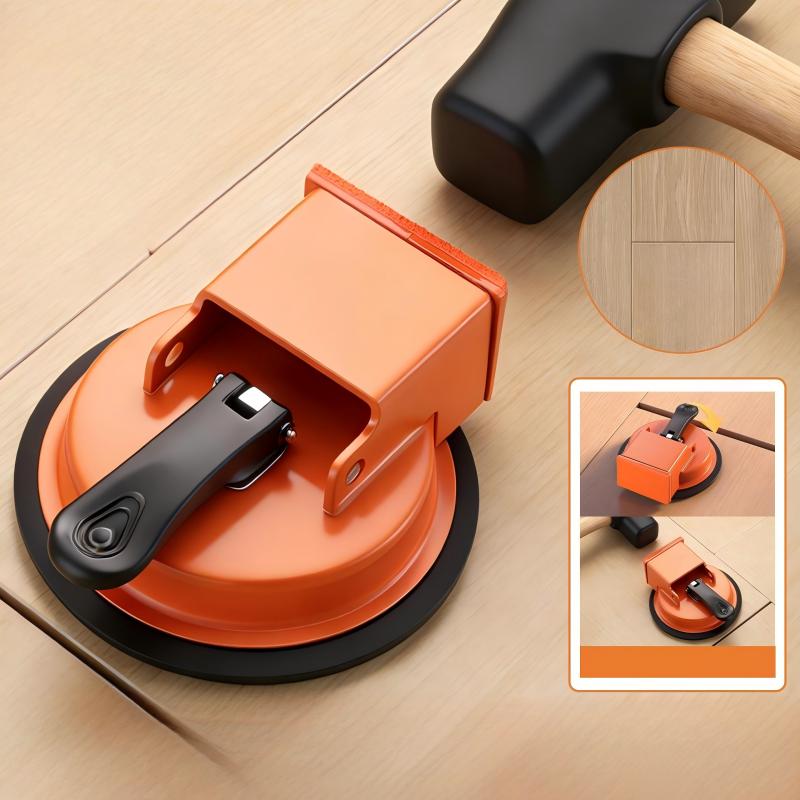
Lock The Suction. Tap The Plank Back.
Clean and dry the plank surface, position the suction cup and close the handle to create a secure seal.
Strike the dedicated block with controlled mallet taps in the direction the plank needs to move.
Release the suction, inspect the joint and repeat only if further adjustment is needed.
More Surface Contact Before The First Tap.
The current product specifications emphasize a larger suction cup, thick rubber pad and heavy-duty body.
*70 kg / 154.3 lb is the manufacturer's listed suction-force specification. Actual holding performance depends heavily on surface smoothness, cleanliness, porosity and seal quality.
Clean, Dry & Non-Porous Matters.
This tool depends on suction. Textured, porous, damaged or uneven flooring may not create a reliable seal.
Best suited to surfaces capable of forming a continuous suction seal.
Dust and debris around the rubber pad can reduce suction.
Prepare the surface as directed before attaching the tool.
Porous or heavily textured surfaces may not hold vacuum reliably.
A Simple Tool Built Around One Annoying Floor Problem.
The 118 mm suction pad creates a broad contact area on compatible smooth floor surfaces.
The integrated metal block gives you a clear strike surface for controlled plank movement.
The current specification lists a 9 mm rubber suction pad beneath the metal body.
Current product specifications identify carbon steel and rubber as the main materials.
The handle mechanism lets you engage the suction cup and release it again after adjustment.
Designed as a direct grip-and-tap solution for compatible floating-floor gap adjustments.
Check The Floor Surface Before You Start.
The current product instructions state that this tool is ineffective for repairing solid wood flooring installed over joists. Suction also depends on a sufficiently smooth, clean, dry and non-porous surface.
Before You Start Hitting The Striking Block.
What does this tool actually do?
It creates suction on a compatible floor plank so you have a temporary gripping point. The integrated block can then be tapped with a suitable mallet to help shift the plank toward an open joint.
How large is the suction cup?
The current product specification lists a diameter of 118 mm / 4.65 inches.
Is the 70 kg pulling-force claim guaranteed on every floor?
No. 70 kg / 154.3 lb is the listed maximum specification. Actual suction depends on surface smoothness, porosity, cleanliness, damage, texture and how well the rubber pad seals.
What surfaces work best?
The product instructions call for a clean, dry and non-porous surface. Smooth flooring that can form a continuous vacuum seal is the most suitable.
Will it work on heavily textured flooring?
Not necessarily. Deep texture or uneven surfaces can allow air beneath the suction pad and prevent a reliable seal.
Does it work on solid wood floors over joists?
The current product notes specifically state that it is ineffective for repairing solid wood flooring installed over joists.
Do I strike the suction cup itself?
Use the dedicated integrated striking block shown on the tool rather than hitting the rubber suction edge or random parts of the housing.
Is a mallet included?
The current package description lists one floor gap fixer suction cup. It does not list a mallet as included.
Will this permanently fix every flooring gap?
No. It can help reposition compatible shifted planks. Gaps caused by damaged locking joints, structural movement, installation problems or underlying floor issues may require a different repair.
Before You Start Pulling Up Flooring, Try Moving The Board Back.
Create a secure suction grip on a compatible plank, apply controlled mallet taps through the striking block and bring shifted flooring back toward a tighter joint.
Surface compatibility matters. Test suction before striking, use controlled force, and stop if the plank, locking joint or flooring surface shows signs of damage.


